
August 8, 2026
Introducing FlexiChess: serious chess prep, in your browser
Andrew
I bought ChessBase a few years back. Once I'd paid and downloaded the database, the interface was so dense that anything simple felt like work. So I built the preparation tool I actually wanted, in a browser, nothing to install. This post is what it does and exactly what's free.
Search 10.4 million games by the position, whatever the move order
Every isolated-queen-pawn middlegame a 2700+ player won with White? Type IQP and pick it from the suggestions, then add 2700+ and White won. Each one lands as a chip you can drop again. Rook endgames that were drawn. Hedgehog with Black. Minority attacks, exchange sacs in the Dragon, the Maróczy bind. The index reads the position itself, so you find games by the pattern you're studying rather than guessing which opening reaches it. Or put an exact position on the board and find it across all 10.4 million games, transpositions included.
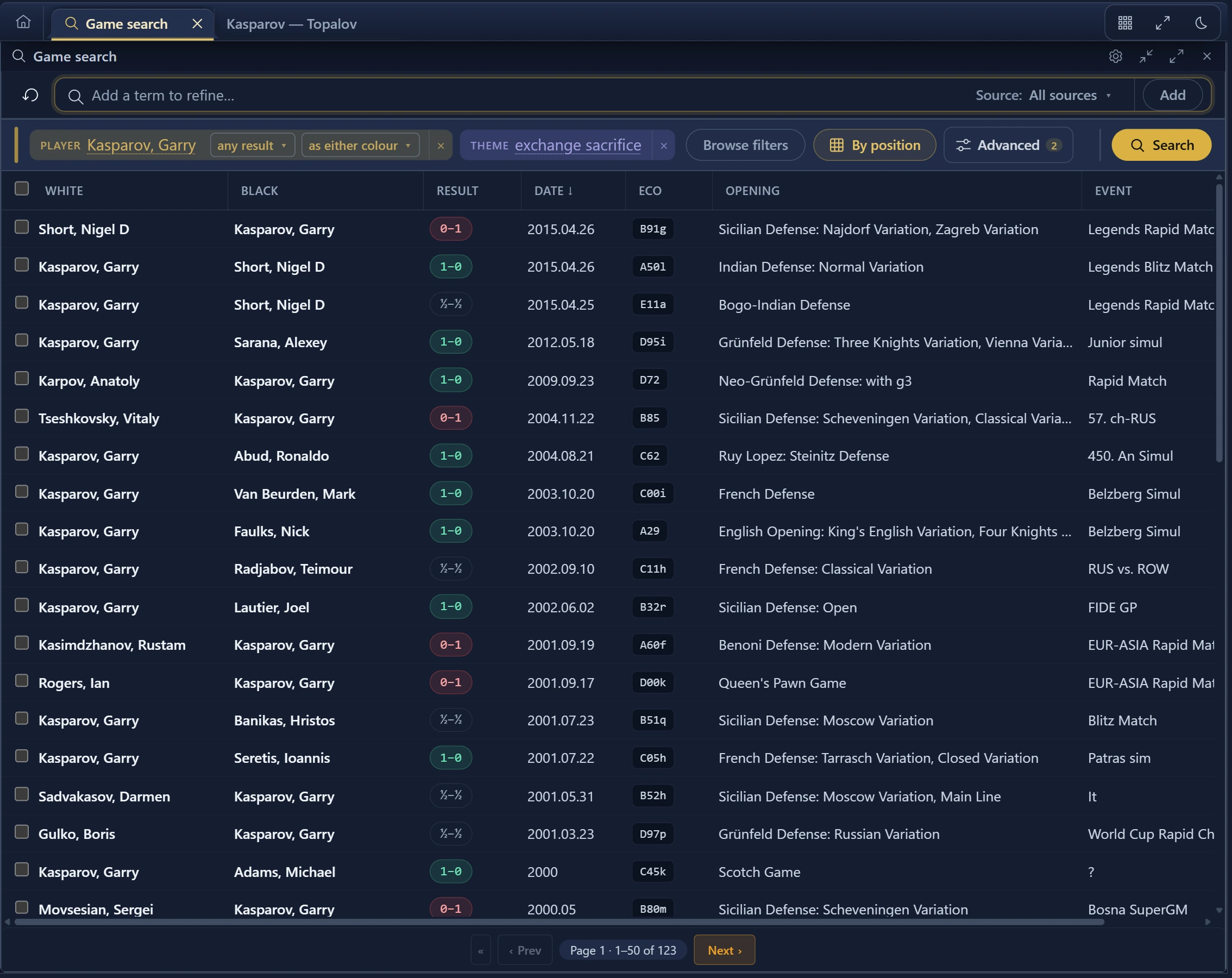
Searches come back in seconds, and stacking filters doesn't slow them down. It won't study the games for you. But if you've ever spent an evening hunting for games with one structure in them, that hunt is the tedious half, and this kills it.
What's in the database
Real tournament games, actual events, real players, real ratings, from club level to the world championship. The time controls are mixed (mostly classical, but rapid and blitz are in there too, and online titled events like Titled Tuesday from 2026 on), and it isn't elite-only. The median game sits around 2090, and 2500+ is a slice rather than the whole. That's deliberate. Filter to the strength you care about, or leave it open and see how a structure plays out across levels.
The same games, read as statistics
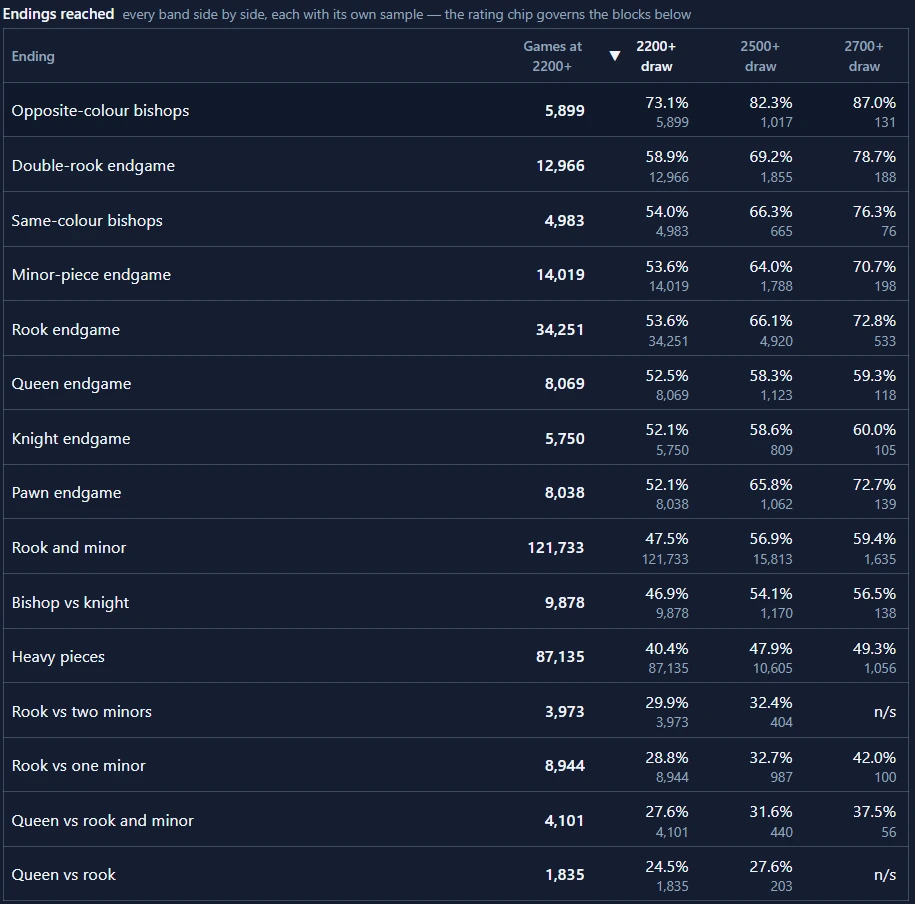
Because every game is indexed by structure, the database can answer questions no explorer can. The Statistics page reads the whole corpus by opening, middlegame and endgame: how often each ending is drawn at 2200+, 2500+ and 2700+, which openings produce it, how an extra pawn converts, and who the strongest players on record are by era. Filter it by period and time control. No account for any of it.
A coach that's checked before it speaks
Every chess chatbot's failure mode is the confident illegal move. So before an answer from the coach reaches you, every move it names is checked on a real board, and if one doesn't hold up the answer is generated again. That whole class of error gets caught mechanically. It's short on purpose too, the idea plus the line that backs it, no essays.
A workspace you arrange yourself
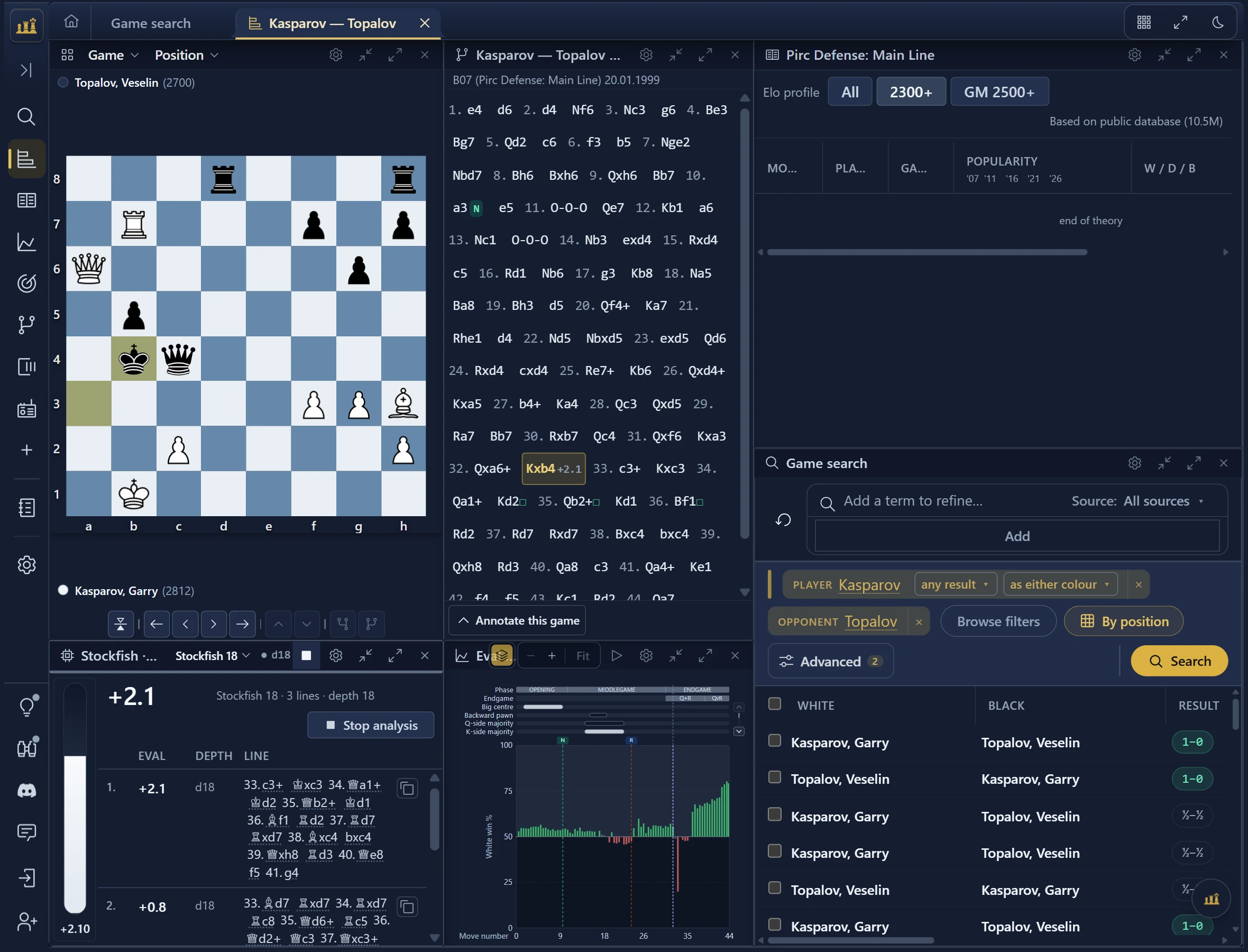
Board, engine, notation, opening explorer, coach: drag and resize them into whatever layout fits your prep, saved per tab, with a fullscreen mode that gives the work the whole screen. Multi-line Stockfish, the eval graph and move classification run free in your browser. A free account opens the rest: repertoire building with FSRS spaced repetition, player analysis, and Leakfinder, which reads your own games and ranks the mistakes you keep repeating.
What's free, exactly
No account: the board, the engine, the 10.4 million game search with as many position types stacked as the question needs, and the opening explorer. A free account adds Pallas the AI coach, importing your own games, a 10,000-game cloud library, 5 coach questions a week once your email is verified (every one on the same model Pro gets), and a thousand player analyses a month. If you run out of coach questions, $10 buys 40 more and they don't expire. Importing needs that verified email, and once it's verified your library backs up to the account automatically. There's no switch to turn that off. Export to PGN whenever you want.
Pro is US$9 a month or US$90 a year and raises the ceilings: up to 35 coach questions a week and a cloud library of up to 250,000 games. Every number is on the pricing page.
Why it's paid at all: coach answers and write-ups burn engine time and tokens, analyzing a player costs compute, and the database sits on servers. There are no ads and your data isn't for sale. Pro is what funds it.
Where Lichess fits
Lichess is excellent and this doesn't replace it. Its opening explorer answers "what happens from this position". FlexiChess answers a different question, find me the games where a structure, an endgame, a theme and a result all hold at once, across the whole database or across your own imported games. Play and make studies there. Prep here.
Try it: No account needed for the board, engine and search. Open FlexiChess →
Related: How to search any chess position across millions of tournament games · How to build an opening repertoire that survives real games
← All posts