
October 3, 2026
Why you forget your opening prep, and how spaced repetition fixes it
Andrew
You learned the line three weeks ago. Over the board, nothing. Memory decays on a curve, fast at first, then slower, and the only thing that resets the curve is reviewing at the right moment, just before the line slips. Too early wastes the review. Too late and you're relearning from zero.
The catch is that "the right moment" is different for every line and keeps moving. Some lines stick after one look. The ones you keep fumbling need to come back tomorrow, then in three days, then in ten. Nobody schedules that by hand across a repertoire of hundreds of positions, which is why re-reading your whole repertoire every few weeks feels productive and isn't. Most of that time lands on lines you already know.
Spaced repetition schedules it for you. Each position is tracked separately. Recall it correctly and the interval grows, miss it and it shrinks. Anki made the method standard for languages and medicine, and FSRS is the modern scheduler. Applied to openings, the card is a position, the answer is your move, and a short session lands almost entirely on the lines that were about to slip.
Three things separate drilling that transfers to games from flashcard busywork:
- Drill on a board. In a game, the position is the cue. Recalling moves from a text list trains a retrieval path you'll never use with a clock running.
- Drill your lines. The point is remembering the repertoire you actually play, and a purchased course is mostly positions you'll never reach.
- Feed it from your games. When a line goes wrong over the board, put that position in the deck. Your own failures are the highest-value cards you'll ever add.
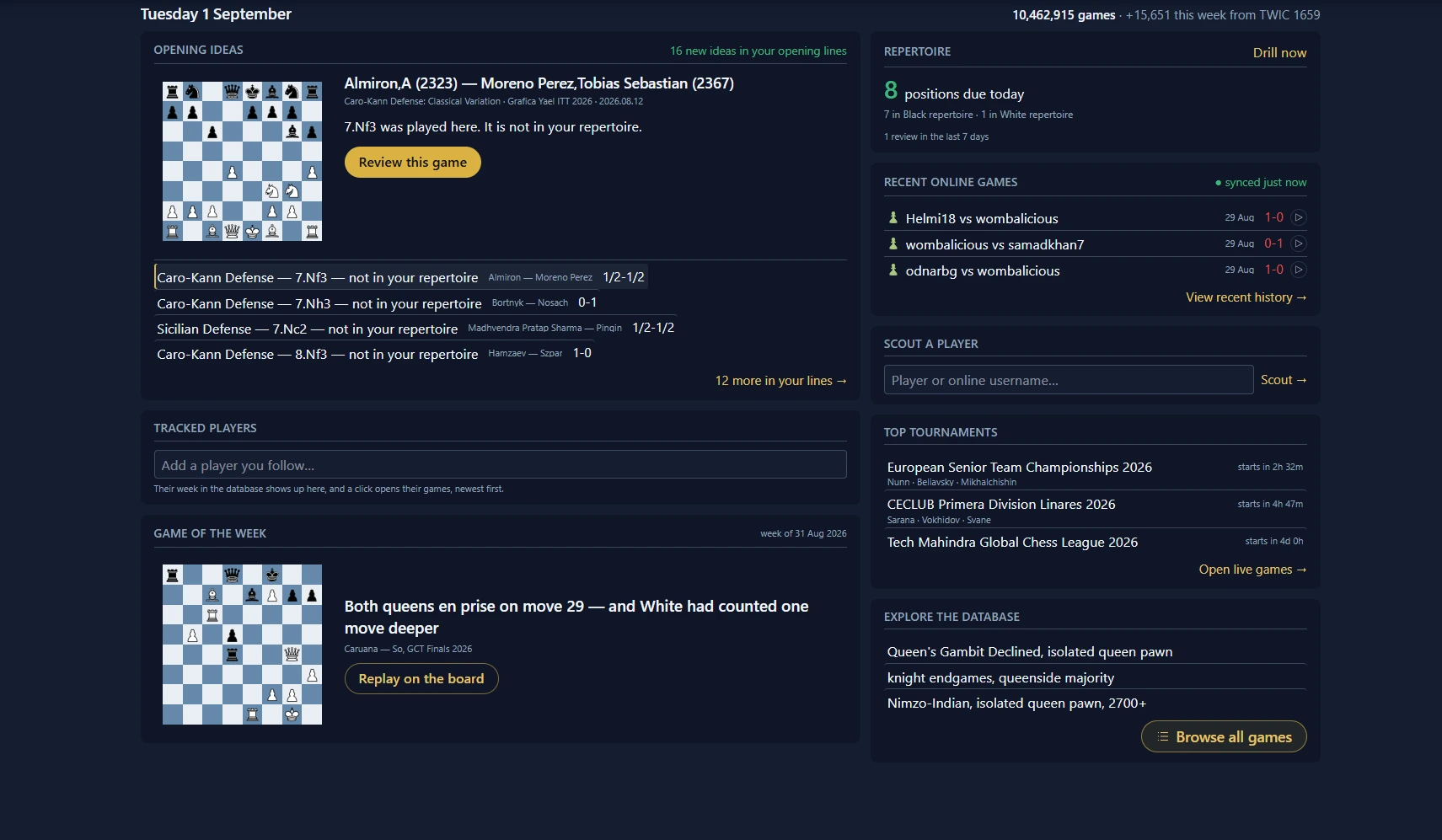
FlexiChess builds FSRS into repertoire training directly. Build or import your repertoire and the trainer drills it on a real board: you play your prepared reply, and a miss shows you the line and comes back later in the session. It counts what's due today and offers three runs, the new positions, the due ones, or the whole deck. Any line from a game goes in with a right-click on the move in the notation. Free with a free account, with room for 50 saved repertoires (200 on Pro). Fifteen minutes a day on the right positions beats an evening of cramming you'll have lost by the weekend.
Try it: Build a deck from your own lines and drill it free. Open FlexiChess →
Related: How to build an opening repertoire that survives real games · How to study your own chess games
← All posts