
September 19, 2026
How to study your own chess games (a repeatable system)
Andrew
Engine on, watch the bar twitch, confirm the blunder you already felt on move 27, close the tab. That review taught you nothing. The mistakes an engine flags loudest are the ones you already knew about.
A review that earns its time:
Annotate blind first. One pass through the game before the engine comes on: where you felt in control, where you started guessing, the move you spent eight minutes on, the moment it slipped. The engine can tell you what was true. Only you know what you believed, and the gap between the two is the entire lesson.
Work three moments. A game is decided at two or three points and the rest is noise. Find them by the evaluation swings, by your own long thinks (uncertainty you can measure), and by the phase changes, opening to middlegame, middlegame to endgame, where plans change and drift sets in. Skip the forty half-pawn dips.
Name the cause. "Nf5 was a mistake" fixes nothing. Miscalculated a specific line, had no plan in the structure, knew the opening moves but not the resulting middlegame, was down to two minutes. Each of those has a different cure, and "don't blunder" cures none of them.
Find where you left the book, and check the position against the database. Take the last position you were sure of and look at what strong players play there. Often the opening was fine and the trouble started three moves later, or you've been repeating a slightly inferior move for months. Either way, one game just became a repertoire fix that covers the next ten.
Leave with one sentence. "Add this position to the drill deck." "I rush in equal endgames." "Learn the plans in the Carlsbad." One applied takeaway per game compounds. Ten vague ones evaporate.
In FlexiChess
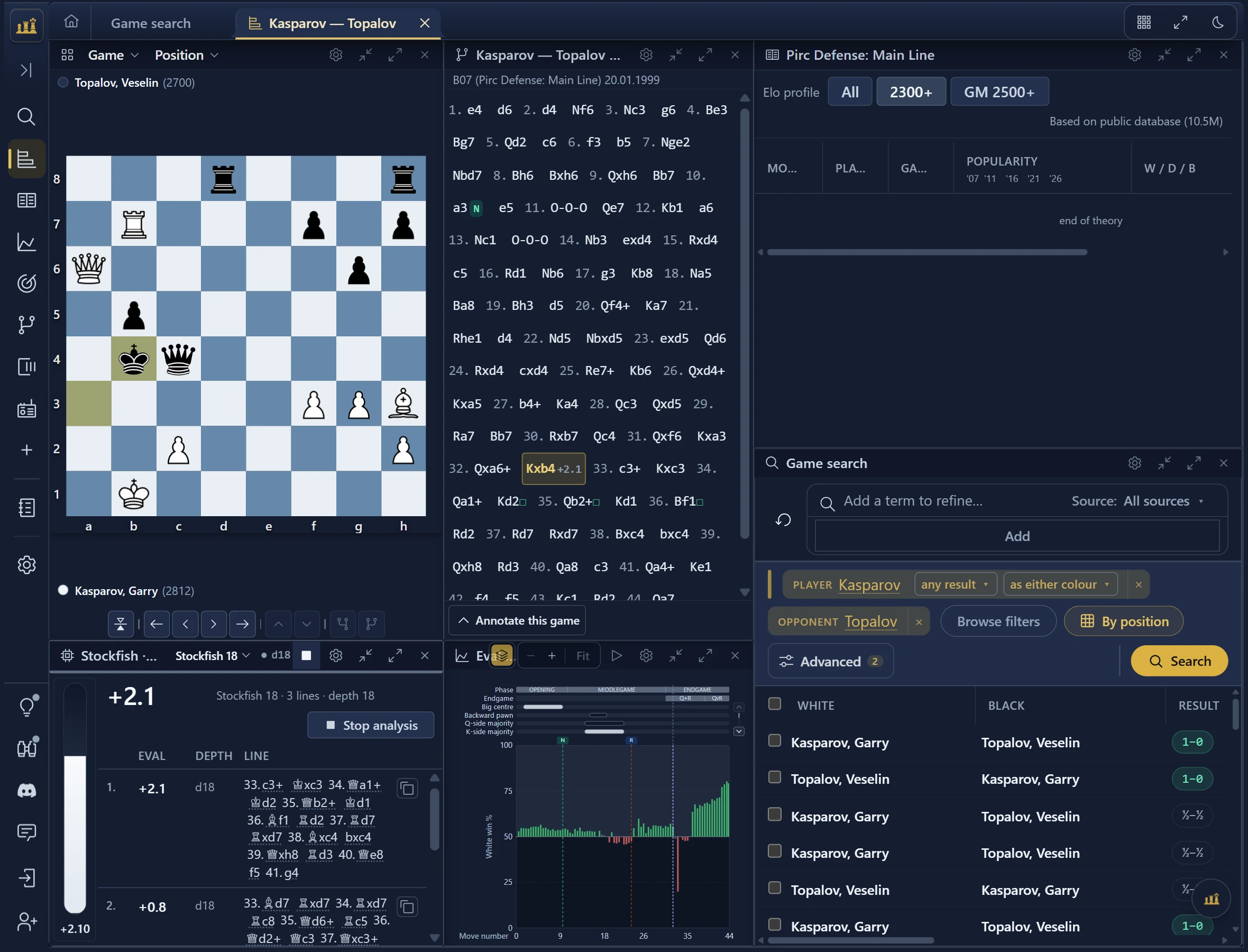
The whole loop runs in one workbench. Bring your games in by Lichess or Chess.com handle, or from a PGN. The engine, the eval graph and the move labels are free with no account. Press Review game and it scores both sides, gives an accuracy figure per side and per phase, and marks the moves the game turned on, including the only moves you found and the wins you missed. Any position is one menu item from FlexiBase, Search position in FlexiBase, and the pawn structure has its own. Pallas answers questions about the position, with every move it names checked on a real board first. A free account has 5 coach questions a week and Pro raises that to 35.
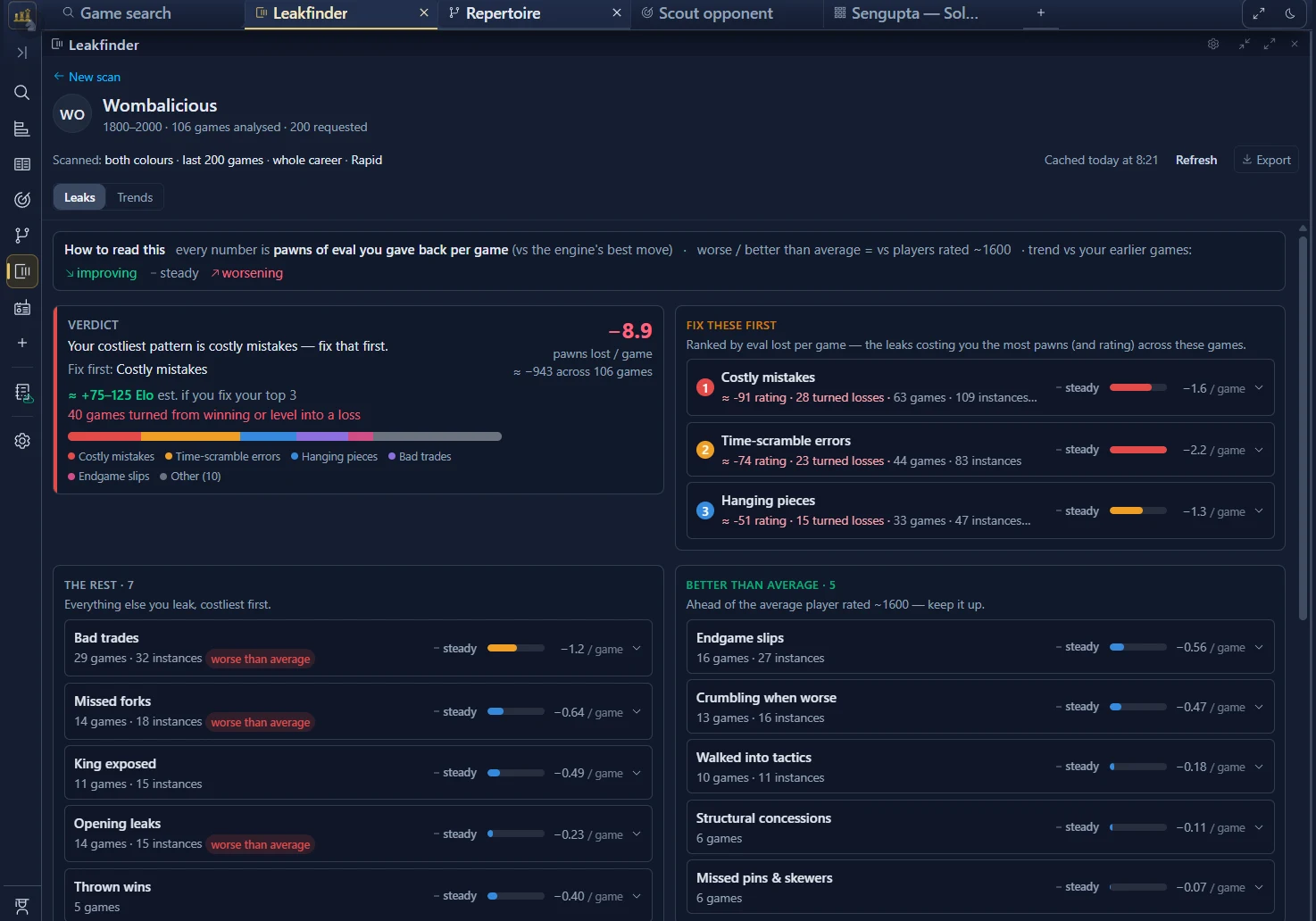
The cause step has its own tool. Leakfinder reads every game you've imported and ranks the mistakes you keep repeating by how much eval each one gives back per game, with the rate a 2400-rated player gives back beside it. So "I rush in equal endgames" stops being a hunch, and the positions it found in your own games can go straight into a drill deck.
Try it: Engine review and position search are free. Open FlexiChess →
Related: How to search any chess position across millions of tournament games · What a chess engine eval graph actually tells you
← All posts